A laminectomy is one of the most common spine operations performed today. It creates more room inside the spinal canal so that squeezed nerves can breathe again. If you have leg pain, numbness or weakness that gets worse when you walk, your doctor may have mentioned this surgery. This guide explains what a laminectomy is, who needs it, how it is done and what recovery really looks like, in clear and simple language.
What Is a Laminectomy?
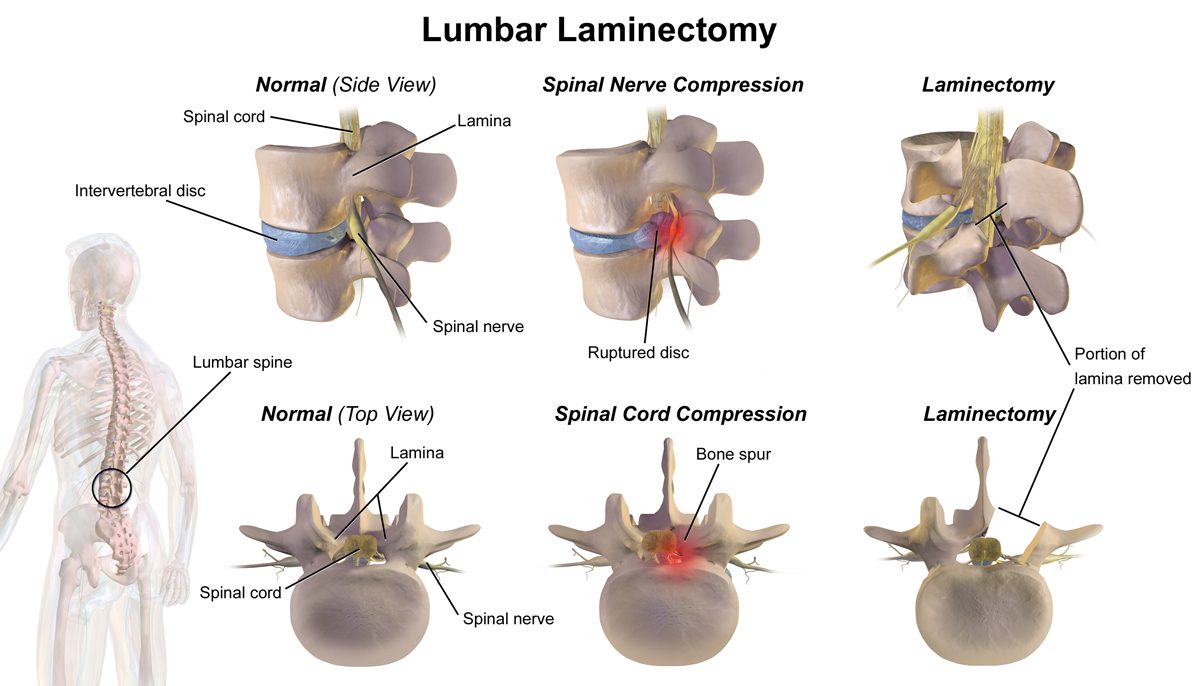
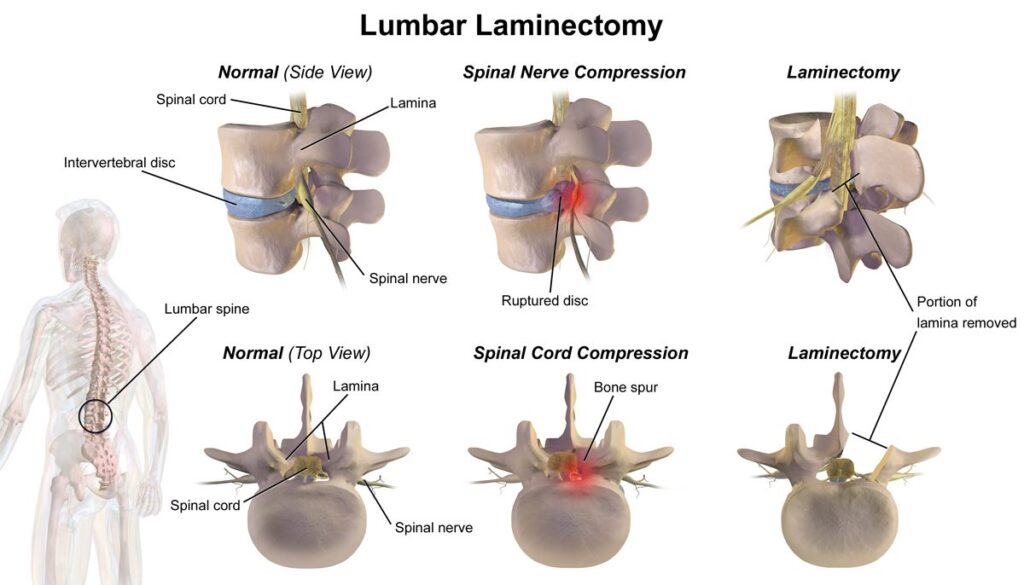
Your spine is made of small bones called vertebrae. Each vertebra has a ring of bone at the back that protects the spinal cord and nerves. The flat roof of this ring is called the lamina. In a laminectomy, the surgeon removes part or all of the lamina. As a result, the spinal canal becomes wider and the pressure on the nerves goes down.
Surgeons often call this operation “decompression surgery”. In addition to the bone, the surgeon usually removes a thickened ligament (the ligamentum flavum) and any bone spurs that press on the nerves. Sometimes a slipped disc is also trimmed during the same operation.
A laminectomy can be done in the lower back (lumbar spine), the neck (cervical spine) or, less often, the middle back (thoracic spine). However, the lower back is by far the most common site.
Why Is Laminectomy Surgery Needed?
The main goal of a laminectomy is to relieve nerve compression. Several conditions can narrow the spinal canal over time. The most common ones include:
- Lumbar spinal stenosis: age-related narrowing of the spinal canal. This is the top reason for a laminectomy. Read more in our guide on spinal stenosis treatment.
- Bone spurs and arthritis: wear and tear of the facet joints can create extra bone that crowds the nerves.
- Thickened ligaments: the ligament behind the spinal canal can bulge with age.
- Herniated or slipped disc: disc material can push into the canal. See our article on slip disc treatment.
- Spinal tumours, cysts or infections: these can take up space and press on the cord.
- Spinal injury: broken bone fragments may need removal.
Symptoms That May Point Towards a Laminectomy
Nerve compression causes a typical set of symptoms. Many patients first notice that walking becomes harder. For example, they may need to stop and sit after walking a short distance. Doctors call this “neurogenic claudication”. Other common symptoms are:
- Pain that spreads from the lower back into the buttocks and legs
- Numbness, tingling or a “pins and needles” feeling in the legs or feet
- Weakness in the legs or a feeling that the legs may give way
- Relief when bending forward, sitting or leaning on a shopping trolley
- Neck pain with clumsy hands or poor balance, when the neck is affected
Sudden loss of bladder or bowel control, or numbness around the private parts, is a medical emergency. In that case, go to a hospital straight away, because urgent decompression may be needed.
When Should You Consider Surgery?
Most people with spinal stenosis do not need surgery at first. Instead, doctors usually start with simpler treatments, such as:
- Physiotherapy and core-strengthening exercises
- Pain-relieving and nerve-calming medicines
- Epidural steroid injections
- Weight control and staying active
Even so, a laminectomy is worth considering if these treatments do not help after a fair trial. Surgery is also advised when symptoms keep getting worse, when walking distance becomes very short, or when there is weakness, numbness or bladder trouble. Your neurosurgeon will match your symptoms with your MRI scan before making a decision. The scan alone is never enough; the symptoms must fit the findings.
Types of Laminectomy
Not every laminectomy is the same. Depending on your scan and symptoms, your surgeon may choose one of these approaches:
- Full laminectomy: the whole lamina at one or more levels is removed.
- Hemilaminectomy: only one side of the lamina is removed, which is useful when symptoms are on one side.
- Laminotomy: a small window is made in the lamina instead of removing it fully.
- Laminoplasty: used mainly in the neck; the lamina is hinged open like a door rather than removed.
- Laminectomy with foraminotomy: the side openings where nerve roots exit are also widened.
- Laminectomy with fusion: screws and rods are added when the spine is unstable or a vertebra has slipped forward.
How to Prepare for Laminectomy Surgery
Good preparation makes surgery safer and recovery smoother. Before the operation, your team will usually:
- Review your MRI and, if needed, X-rays taken while bending forward and backward
- Check blood tests, heart health and other medical conditions such as diabetes
- Ask you to stop blood thinners for a few days, but only on medical advice
- Advise you to stop smoking, because smoking slows healing
- Explain fasting rules for the night before surgery
It also helps to arrange support at home for the first week. For instance, keep everyday items at waist height so that you do not have to bend or reach.
The Laminectomy Procedure: Step by Step
A laminectomy is done under general anaesthesia, so you will be asleep and feel no pain. The operation usually takes between one and three hours. The time depends on how many levels need treatment and whether fusion is added. The main steps are:
- You lie face down on a padded frame that keeps pressure off your tummy.
- The surgeon makes a cut along the middle of the back over the affected level.
- The back muscles are gently moved aside to expose the bone.
- Using an operating microscope, the surgeon removes the lamina, the thickened ligament and any bone spurs.
- The nerves are checked to make sure they are free and pulsating normally.
- If the spine is unstable, screws and rods are placed to fuse the bones.
- The wound is closed with stitches or clips, and a small drain may be left for a day.

Minimally Invasive Laminectomy
Many patients today can have a minimally invasive laminectomy. In this method, the surgeon works through a small tube or an endoscope. Consequently, there is less muscle damage, less blood loss and often a shorter hospital stay. Not everyone is suitable, though. Large multilevel stenosis or instability may still need open surgery. Learn more in our article on minimally invasive spine surgery.
Laminectomy vs Discectomy vs Spinal Fusion
These three operations are often confused. Here is a simple way to tell them apart:
- Laminectomy removes bone and ligament to widen the canal. It treats stenosis.
- Discectomy removes the piece of disc that presses on a nerve. It treats a slipped disc and sciatica. Read about sciatica surgery to learn more.
- Spinal fusion joins two or more vertebrae together to stop painful or unstable movement. See our guide to spinal fusion surgery.
In some patients, a surgeon combines these procedures in one operation. Therefore, the final plan always depends on your scan, your symptoms and your spine’s stability.
Recovery After Laminectomy
Recovery after a laminectomy is often quicker than people expect. Most patients are helped out of bed and walk on the same day or the next morning. A typical timeline looks like this:
- Hospital stay: usually one to three days for a simple laminectomy, and a little longer if fusion is done.
- First two weeks: short, frequent walks; no heavy lifting, bending or twisting. The wound must stay clean and dry.
- Two to six weeks: many people return to desk work and light daily tasks. Physiotherapy often starts in this period.
- Six to twelve weeks: gradual return to more active work, driving longer distances and light exercise, as advised.
- Three to six months: full recovery, especially after fusion, when the bones need time to knit together.
Leg pain often eases soon after surgery. On the other hand, numbness and weakness may take weeks or months to improve, because nerves heal slowly. For more general advice, see our spine surgery recovery guide.
Tips for a Smoother Recovery
- Walk a little more each day; walking is the best exercise after spine surgery.
- Use the “log roll” method to get out of bed.
- Avoid sitting for long periods in the first few weeks.
- Take pain medicines on time, as prescribed.
- Keep follow-up appointments so your surgeon can check your progress.
Risks and Possible Complications
A laminectomy is generally a safe and well-established operation. Still, like any surgery, it carries some risks. These include:
- Wound infection
- Bleeding or a blood clot near the nerves
- A small tear in the covering of the nerves (dural tear), which may cause a fluid leak and headache
- Nerve injury, causing new numbness or weakness, which is uncommon
- Blood clots in the legs or lungs
- Spinal instability over time, which may later need fusion
- Return of symptoms if stenosis develops at another level
Careful patient selection, an operating microscope and nerve monitoring help to keep these risks low. Your surgeon will explain your personal risk before you agree to surgery.
Results and Long-Term Outlook
Most patients who have a laminectomy for spinal stenosis notice less leg pain and can walk further than before. Back pain may also improve, although relief of leg symptoms is usually more reliable. Many people return to normal daily life, travel and hobbies. Staying active, keeping a healthy weight and doing regular core exercises help protect the result for years.
According to the NHS guide to lumbar decompression surgery, this type of operation is usually recommended only when other treatments have not worked. You can also read a general overview of the laminectomy procedure for background.
Laminectomy Surgery in Gurugram with Dr Aditya Gupta
Dr Aditya Gupta is a senior neurosurgeon at Artemis Hospitals, Gurugram, with more than 26 years of experience in brain and spine surgery. He treats spinal stenosis and nerve compression with microscope-assisted and minimally invasive techniques whenever suitable. Every plan starts with a detailed examination and a careful review of your scans. If you have leg pain or walking trouble that is not getting better, you can book an appointment for a personal assessment.
Frequently Asked Questions
Is a laminectomy a major surgery?
A laminectomy is a significant operation on the spine. However, it is very common, well studied and usually needs only a short hospital stay. Minimally invasive methods can make it even less demanding.
How long does it take to recover from a laminectomy?
Most people return to light work within two to six weeks. Full recovery can take about three months, or longer if fusion is also done.
Will I be able to walk normally after a laminectomy?
Yes, in most cases. In fact, better walking distance is one of the main benefits of the surgery. Patients usually walk within a day of the operation.
Can spinal stenosis come back after laminectomy?
The treated level rarely narrows again. Even so, stenosis can develop at other levels over the years, because the spine continues to age.
What is the success rate of laminectomy?
Results depend on age, health, the number of levels and how long the nerves were compressed. In general, most well-selected patients report meaningful relief of leg pain. Your surgeon can give you a realistic estimate after examining you.
Medical disclaimer: This article is for general information and education only. It is not a substitute for a personal consultation, diagnosis or treatment. Please speak to a qualified doctor about your own symptoms.