Sciatica Pain: Causes, Symptoms & Best Treatment Options
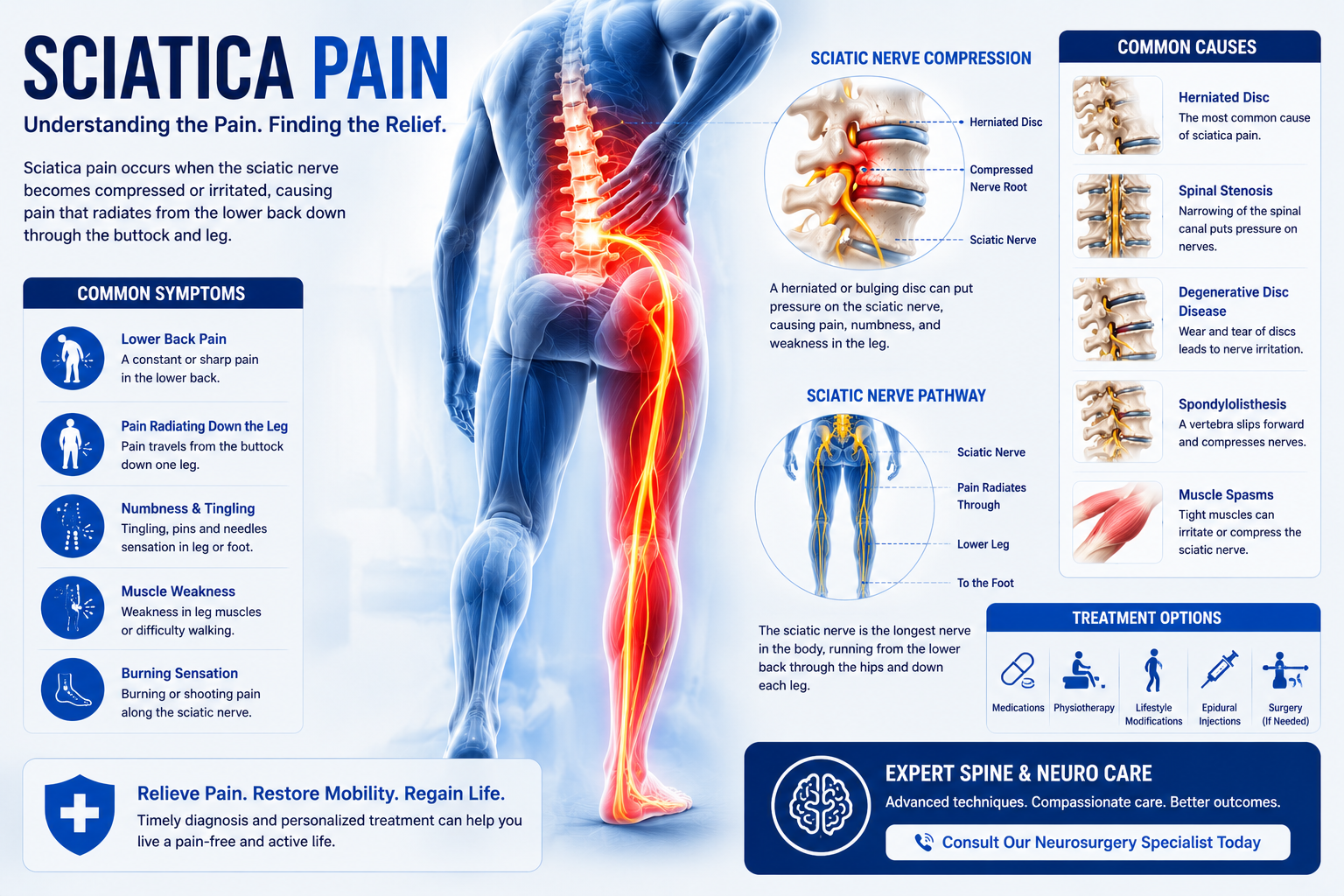
Sciatica pain is one of the most common causes of leg pain and lower back discomfort. It occurs when the sciatic nerve—the longest and largest nerve in the human body—becomes irritated, inflamed, or compressed. The condition can cause pain that radiates from the lower back down through the buttocks and into one or both legs.
While mild sciatica may improve with rest and conservative treatment, severe or persistent symptoms can significantly impact daily activities and quality of life. Understanding sciatica pain, its causes, symptoms, and treatment options can help individuals seek timely medical care and prevent long-term complications.
In this article, we discuss everything you need to know about sciatica pain, including warning signs, diagnosis, treatment options, and when to consult a spine specialist or neurosurgeon.
What Is Sciatica Pain?
Sciatica refers to pain caused by irritation or compression of the sciatic nerve. The sciatic nerve originates from nerve roots in the lower spine and travels through the hips, buttocks, and down each leg.
When pressure is placed on the nerve, it can cause pain, numbness, tingling, or weakness along the nerve pathway.
Unlike ordinary back pain, sciatica typically affects one side of the body and often radiates into the leg.

Sciatica Pain Symptoms
The symptoms of sciatica pain vary depending on the severity and location of nerve compression.
Common Sciatica Pain Symptoms
- Lower back pain
- Pain radiating down the leg
- Buttock pain
- Burning sensation in the leg
- Tingling or pins-and-needles sensation
- Numbness in the leg or foot
- Muscle weakness
- Difficulty standing for long periods
Severe Sciatica Symptoms
In advanced cases, symptoms may include:
- Significant leg weakness
- Loss of balance
- Difficulty walking
- Loss of bladder control
- Loss of bowel control
These symptoms may indicate a serious condition requiring urgent medical attention.
What Causes Sciatica Pain?
Several conditions can compress or irritate the sciatic nerve.
Herniated (Slipped) Disc
A slipped disc is the most common cause of sciatica. The damaged disc presses against the sciatic nerve roots, causing pain and neurological symptoms.
Spinal Stenosis
Spinal stenosis occurs when the spinal canal narrows and compresses nearby nerves.
Degenerative Disc Disease
Age-related degeneration of spinal discs can contribute to nerve irritation.
Bone Spurs
Extra bone growth can narrow spaces around nerves and cause compression.
Spondylolisthesis
This condition occurs when one vertebra slips over another and compresses spinal nerves.
Injury or Trauma
Accidents and injuries affecting the lower back may trigger sciatica symptoms.
Risk Factors for Sciatica Pain
Several factors increase the likelihood of developing sciatica.
Common Risk Factors
- Age above 40 years
- Sedentary lifestyle
- Obesity
- Poor posture
- Occupations involving prolonged sitting
- Heavy lifting
- Smoking
- Diabetes
Maintaining spinal health can help reduce these risks.
How Is Sciatica Pain Diagnosed?
Accurate diagnosis helps identify the underlying cause and guide treatment.
Physical Examination
A specialist may evaluate:
- Muscle strength
- Reflexes
- Walking pattern
- Nerve function
- Range of motion
MRI Scan
MRI is one of the most effective imaging tests for identifying disc problems and nerve compression.
CT Scan
CT scans provide detailed images of spinal structures.
X-Ray
X-rays help identify bone abnormalities and spinal alignment issues.
Nerve Conduction Studies
These tests evaluate nerve function and help determine the severity of nerve damage.
Best Treatment Options for Sciatica Pain
Most patients improve without surgery.
Medications
Doctors may recommend:
- Anti-inflammatory medications
- Pain relievers
- Muscle relaxants
- Nerve pain medications
Physical Therapy
Physical therapy is one of the most effective treatments for sciatica.
Benefits include:
- Improved flexibility
- Reduced pain
- Better posture
- Stronger core muscles
- Reduced recurrence risk
Hot and Cold Therapy
Applying ice packs and heat therapy can help reduce inflammation and muscle spasms.
Lifestyle Modifications
Simple lifestyle changes can significantly improve symptoms.
Helpful Measures
- Maintaining proper posture
- Regular stretching
- Weight management
- Avoiding prolonged sitting
- Staying physically active
Advanced Treatment Options for Sciatica
When conservative treatment fails, advanced interventions may be required.
Epidural Steroid Injections
These injections help reduce inflammation around irritated nerves and provide temporary pain relief.
Minimally Invasive Spine Procedures
Modern minimally invasive techniques can relieve nerve compression while reducing recovery time.
Radiofrequency Ablation
This procedure may help manage chronic pain in selected patients.
When Is Surgery Required for Sciatica Pain?
Surgery may be recommended when:
- Symptoms persist despite treatment
- Severe nerve compression exists
- Progressive weakness develops
- Loss of bladder or bowel control occurs
Common Surgical Procedures
Microdiscectomy
Removes the portion of a herniated disc pressing on the nerve.
Laminectomy
Creates additional space around compressed nerves.
Spinal Decompression Surgery
Relieves pressure on the spinal cord and nerve roots.
Modern spine surgery techniques offer excellent outcomes for carefully selected patients.
For advanced spine and nerve care, visit:
Dr. Aditya Gupta
https://dradityagupta.com/
Can Sciatica Pain Be Prevented?
Although not all cases can be prevented, certain habits help reduce risk.
Prevention Tips
- Exercise regularly
- Maintain proper posture
- Strengthen core muscles
- Avoid smoking
- Lift objects correctly
- Maintain a healthy weight
- Avoid prolonged sitting
These measures support spinal health and reduce strain on the sciatic nerve.
When Should You See a Neurosurgeon for Sciatica Pain?
You should seek specialist evaluation if you experience:
- Persistent leg pain
- Numbness or tingling
- Muscle weakness
- Difficulty walking
- Symptoms lasting more than a few weeks
- Loss of bladder or bowel control
Early diagnosis can prevent permanent nerve damage and improve treatment outcomes.
Trusted Resources on Sciatica Pain
For additional information, visit:
These trusted organizations provide reliable information on spinal disorders and nerve-related pain.
Conclusion: Understanding Sciatica Pain
Sciatica pain is a common condition that can cause significant discomfort and affect mobility. While most cases improve with conservative treatment, persistent or severe symptoms should never be ignored.
Recognizing sciatica pain symptoms early and seeking appropriate treatment can help prevent complications and improve quality of life. Modern treatment options, including physical therapy, medications, minimally invasive procedures, and advanced spine surgery, offer excellent outcomes for many patients.
If you are experiencing persistent leg pain, numbness, weakness, or lower back pain, consult an experienced neurosurgeon for expert evaluation and treatment.
About Dr. Aditya Gupta
Dr. Aditya Gupta is one of India’s leading neurosurgeons with expertise in spine surgery, minimally invasive spine procedures, nerve compression disorders, brain surgery, and advanced neurological care.
Website: https://dradityagupta.com/
Book Appointment: https://dradityagupta.com/book-appointment/
Frequently Asked Questions (FAQs)
What is the main cause of sciatica pain?
A herniated or slipped disc is the most common cause of sciatica pain.
What are the first symptoms of sciatica?
Common early symptoms include lower back pain, buttock pain, tingling, numbness, and leg pain.
Can sciatica go away on its own?
Many mild cases improve with rest, physical therapy, and conservative treatment.
How long does sciatica pain last?
The duration varies depending on the cause. Some cases improve within weeks, while others may require medical intervention.
Is walking good for sciatica?
Yes. Gentle walking often helps improve circulation, reduce stiffness, and support recovery.
When should I worry about sciatica?
Seek immediate medical attention if you experience severe weakness, loss of bladder control, or worsening neurological symptoms.