Cervical Spondylosis: Symptoms, Causes & Treatment Options
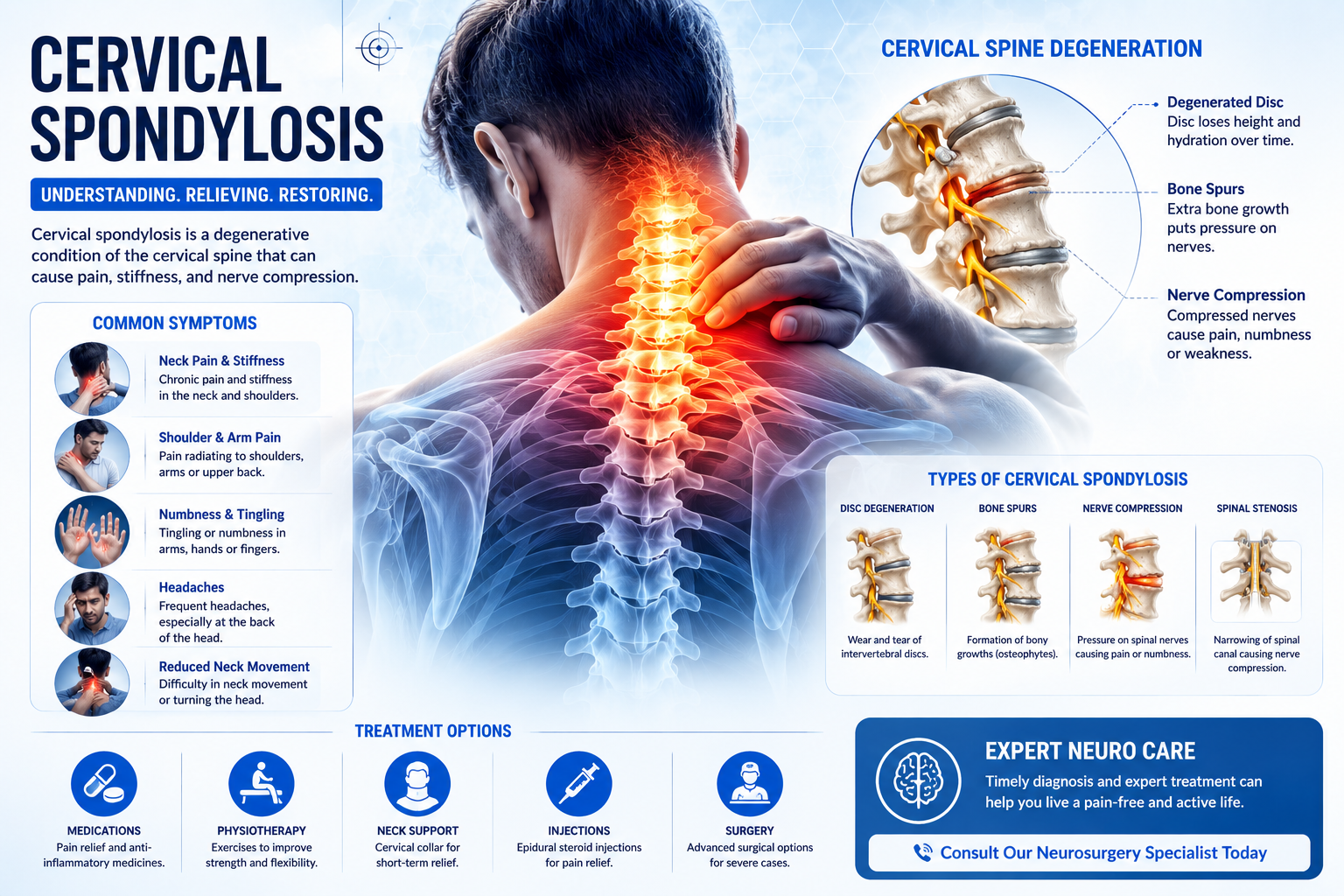
Cervical spondylosis is one of the most common age-related conditions affecting the neck and cervical spine. It occurs due to wear and tear of the spinal discs, bones, and joints in the neck. While many people experience mild symptoms, others may develop chronic neck pain, stiffness, headaches, numbness, or even weakness in the arms and hands.
Understanding cervical spondylosis is important because early diagnosis and appropriate treatment can help prevent complications and improve quality of life. With modern treatment options, most patients can effectively manage symptoms and maintain an active lifestyle.
In this article, we discuss the symptoms, causes, diagnosis, treatment options, and preventive measures for cervical spondylosis.
What Is Cervical Spondylosis?


Cervical spondylosis, often referred to as neck arthritis or cervical osteoarthritis, is a degenerative condition affecting the cervical spine. The cervical spine consists of seven vertebrae in the neck that support the head and protect the spinal cord.
As people age, the discs between the vertebrae gradually lose hydration and elasticity. This can lead to:
- Disc degeneration
- Bone spur formation
- Joint inflammation
- Nerve compression
- Reduced spinal flexibility
Most individuals over the age of 60 show some signs of cervical spondylosis on imaging studies, although not everyone experiences symptoms.
Cervical Spondylosis Symptoms
The symptoms of cervical spondylosis can vary depending on the severity of spinal degeneration and whether nerves are affected.
Common Cervical Spondylosis Symptoms
- Chronic neck pain
- Neck stiffness
- Headaches, especially at the back of the head
- Shoulder pain
- Reduced neck mobility
- Muscle spasms
- Pain that worsens with movement
Symptoms of Nerve Compression
When cervical spondylosis compresses nearby nerves, symptoms may include:
- Numbness in the arms or hands
- Tingling sensations
- Weakness in the arms
- Loss of coordination
- Difficulty gripping objects
Symptoms of Cervical Myelopathy
In severe cases, spinal cord compression can occur.
Warning Signs Include:
- Difficulty walking
- Balance problems
- Loss of fine motor skills
- Weakness in both arms and legs
- Bladder or bowel dysfunction
These symptoms require immediate medical evaluation.
Causes of Cervical Spondylosis
Cervical spondylosis primarily develops due to age-related wear and tear of the cervical spine.
Aging
The most common cause is the natural aging process.
Disc Degeneration
Spinal discs lose water content over time, making them less flexible and more prone to damage.
Bone Spurs
The body may form extra bone growths (osteophytes) in response to degeneration.
Repetitive Neck Movements
Certain occupations that involve prolonged neck strain may increase the risk.
Poor Posture
Long hours spent looking at computers, laptops, or mobile phones can contribute to cervical spine stress.
Previous Neck Injuries
Trauma or injuries may accelerate degenerative changes.
Risk Factors for Cervical Spondylosis
Several factors increase the likelihood of developing cervical spondylosis.
Common Risk Factors
- Age above 40 years
- Sedentary lifestyle
- Smoking
- Poor posture
- Obesity
- Previous neck injuries
- Family history of spine disorders
Maintaining spinal health can help reduce the impact of these risk factors.
How Is Cervical Spondylosis Diagnosed?
Accurate diagnosis is essential for developing an effective treatment plan.
Physical Examination
A specialist evaluates:
- Neck movement
- Muscle strength
- Reflexes
- Sensation
- Balance and coordination
X-Ray
X-rays help identify bone spurs and degenerative changes.
MRI Scan
MRI provides detailed images of discs, nerves, and the spinal cord.
CT Scan
CT scans help evaluate bony structures in greater detail.
Nerve Conduction Studies
These tests assess nerve function and identify nerve compression.
Treatment Options for Cervical Spondylosis
Most patients can be successfully treated without surgery.
Medications
Doctors may prescribe:
- Pain relievers
- Anti-inflammatory medications
- Muscle relaxants
Physical Therapy
Physical therapy helps:
- Improve flexibility
- Strengthen neck muscles
- Improve posture
- Reduce pain
Lifestyle Modifications
Simple changes can make a significant difference:
- Correct sitting posture
- Ergonomic workstations
- Regular stretching exercises
- Weight management
Cervical Collar
Short-term use of a cervical collar may help reduce symptoms during acute flare-ups.
When Is Surgery Required for Cervical Spondylosis?
Surgery may be considered if:
- Symptoms continue despite conservative treatment
- Significant nerve compression is present
- Spinal cord compression develops
- Progressive weakness occurs
Common Surgical Procedures
- Cervical discectomy
- Cervical fusion
- Artificial disc replacement
- Decompression surgery
Modern surgical techniques are highly effective in relieving nerve compression and improving quality of life.
For expert evaluation of cervical spine disorders, visit:
Dr. Aditya Gupta
https://dradityagupta.com/
Can Cervical Spondylosis Be Prevented?
Although aging cannot be prevented, certain lifestyle measures can reduce the risk and severity of cervical spondylosis.
Prevention Tips
- Maintain proper posture
- Exercise regularly
- Strengthen neck and back muscles
- Avoid prolonged screen time
- Use ergonomic furniture
- Maintain a healthy weight
- Avoid smoking
These habits help support long-term spinal health.
When Should You See a Neurosurgeon for Cervical Spondylosis?
You should consult a neurosurgeon if you experience:
- Persistent neck pain
- Numbness in the arms or hands
- Weakness in the upper limbs
- Difficulty walking
- Loss of balance
- Symptoms that worsen despite treatment
Early diagnosis can prevent permanent nerve damage and improve outcomes.
Trusted Resources on Cervical Spondylosis
For additional information, visit:
These trusted organizations provide reliable information about cervical spine disorders and treatment options.
Conclusion: Understanding Cervical Spondylosis
Cervical spondylosis is a common degenerative condition affecting the neck and cervical spine. While many individuals experience mild symptoms, others may develop significant pain, stiffness, nerve compression, and mobility problems.
Recognizing cervical spondylosis symptoms early and seeking timely treatment can help prevent complications and improve quality of life. With proper diagnosis, physical therapy, lifestyle modifications, and advanced treatment options, most patients can successfully manage their condition.
If you are experiencing persistent neck pain, numbness, weakness, or balance problems, consult a qualified neurosurgeon for a comprehensive evaluation.
About Dr. Aditya Gupta
Dr. Aditya Gupta is one of India’s leading neurosurgeons with expertise in spine surgery, minimally invasive neurosurgery, cervical spine disorders, brain tumor surgery, and advanced neurological care.
Website: https://dradityagupta.com/
Book Appointment: https://dradityagupta.com/book-appointment/
Frequently Asked Questions (FAQs)
What are the first symptoms of cervical spondylosis?
Common early symptoms include neck pain, stiffness, headaches, and reduced neck mobility.
Can cervical spondylosis cause numbness in the hands?
Yes. Nerve compression caused by cervical spondylosis can result in numbness, tingling, and weakness in the arms and hands.
Is cervical spondylosis a serious condition?
Mild cases are common and manageable, but severe spinal cord compression may require urgent medical treatment.
Can cervical spondylosis be cured permanently?
Degenerative changes cannot be reversed, but symptoms can often be effectively controlled with treatment.
When is surgery needed for cervical spondylosis?
Surgery may be recommended when nerve compression, spinal cord compression, or progressive weakness occurs.
What is the best treatment for cervical spondylosis?
Treatment depends on severity and may include medications, physical therapy, lifestyle changes, or surgery in advanced cases.