
Advanced Deep Brain Stimulation (DBS) for Parkinson’s Disease: A New Era of Neuromodulation
For patients living with Parkinson’s Disease, the transition from manageable symptoms to debilitating motor fluctuations can be overwhelming. While medication remains the first line of defense, its efficacy often wanes over time, leading to “off” periods and involuntary movements known as dyskinesia.
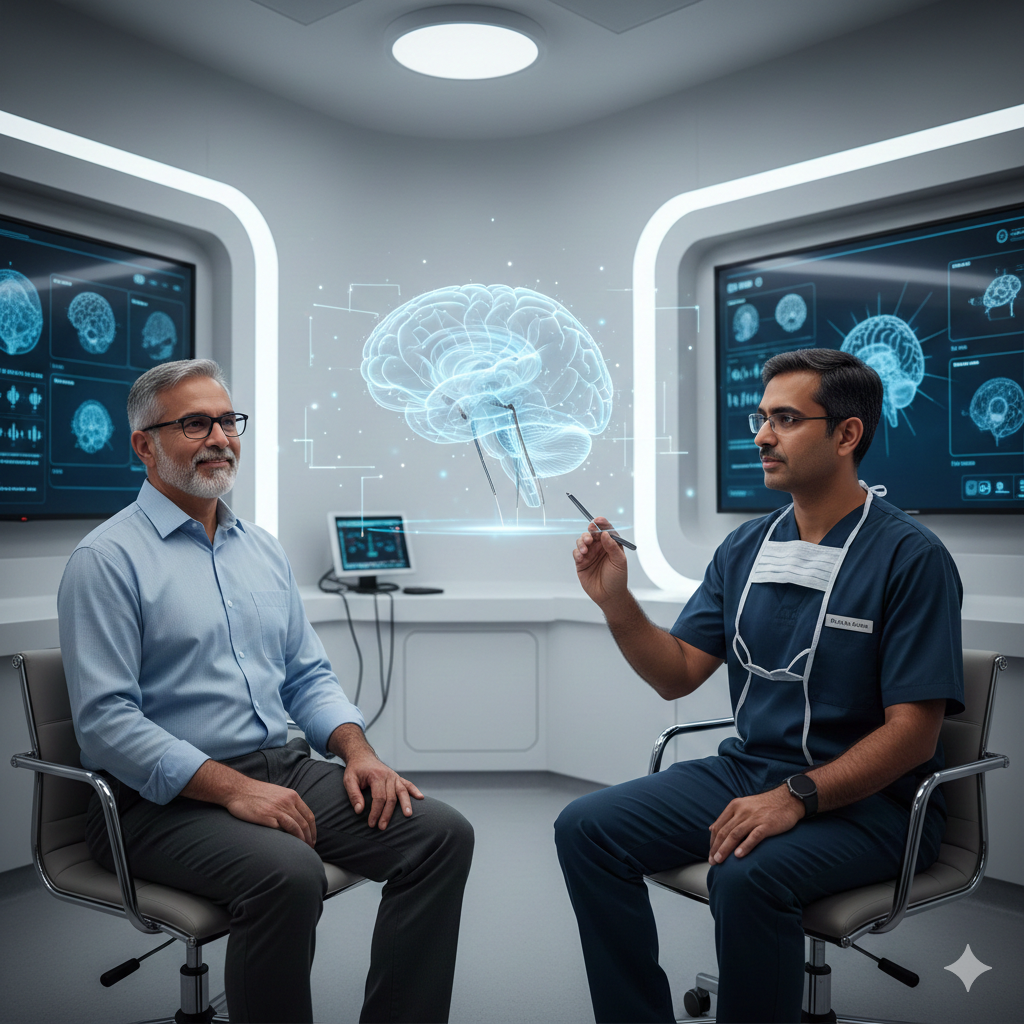
This guide explores Deep Brain Stimulation (DBS), a revolutionary neurosurgical intervention that acts as a “pacemaker for the brain.” We will delve into how this technology—now featuring Adaptive DBS (aDBS) and AI-driven programming—is transforming the lives of patients globally, particularly for those seeking the expertise of the best neurosurgeon in India.
Understanding Deep Brain Stimulation (DBS)
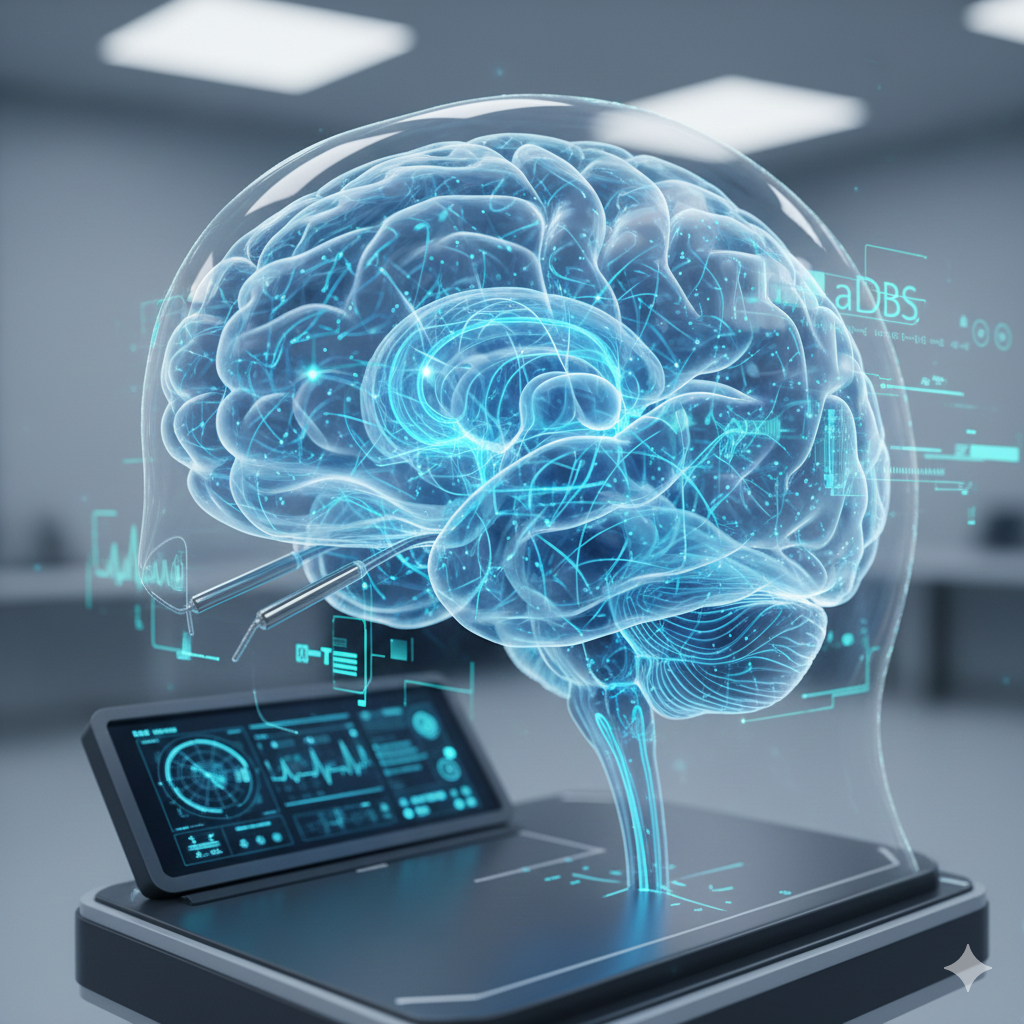
Deep Brain Stimulation is an advanced surgical procedure used to treat the motor symptoms of Parkinson’s Disease, including tremors, rigidity, and bradykinesia (slowness of movement). It involves the precise implantation of thin electrodes into specific regions of the brain, such as the Subthalamic Nucleus (STN) or the Globus Pallidus Internus (GPi).
These electrodes are connected to a small, battery-operated neurostimulator implanted under the skin of the chest. Once activated, the device sends continuous electrical impulses that “reset” abnormal signaling patterns in the brain, restoring smoother motor control.
Featured Snippet: Who is the Ideal Candidate for DBS?
The best candidates for DBS are patients who have had Parkinson’s for at least 4–5 years, respond well to Levodopa but suffer from motor fluctuations (“on-off” cycles), and do not have significant cognitive impairment or dementia.
Latest Advancements in DBS Technology (2025–2026)
The field of functional neurosurgery has moved beyond “fixed” stimulation to more personalized, responsive systems.
1. Adaptive Deep Brain Stimulation (aDBS)
Traditional DBS delivers a constant stream of electricity. However, Adaptive DBS (aDBS), often called “closed-loop” stimulation, represents a major leap forward. This system “listens” to the brain’s electrical signals (specifically beta waves) and adjusts the stimulation level in real-time based on the patient’s current needs.
2. AI and Remote Programming
Artificial Intelligence is now used to analyze gait patterns and neural data to identify the perfect stimulation settings for an individual. Furthermore, remote programming allows a neurosurgeon to fine-tune the device via a secure digital platform, reducing the need for international patients to travel for every adjustment.
3. Directional Leads
Newer electrodes feature “directional leads” that allow surgeons to steer the electrical current toward the intended target and away from areas that might cause side effects, such as speech disturbances or muscle pulling.
Benefits of DBS: What to Expect

The primary goal of DBS is to increase “on” time—periods where the patient can move fluidly without the interference of tremors or dyskinesia.
| Benefit Category | Expected Outcome |
| Motor Control | Significant reduction in tremors, stiffness, and slowness. |
| Medication Reduction | Many patients can reduce their daily medication dosage by 30–50%. |
| Quality of Life | Improved ability to perform daily tasks like writing, eating, and dressing. |
| Consistency | Provides 24-hour symptom coverage, including during sleep. |
The Global Trend: Why Patients Choose India for DBS
India has emerged as a premier global hub for functional neurosurgery, attracting patients from the UAE, UK, USA, and Central Asia. This trend is driven by the presence of world-renowned experts like Dr. Aditya Gupta.
As the best neurosurgeon in India, Dr. Aditya Gupta utilizes cutting-edge technology, including the CyberKnife and advanced neuromodulation systems, to treat complex movement disorders. Patients seeking a top neurosurgeon in India benefit from a multidisciplinary approach where neurosurgeons and movement disorder specialists collaborate to ensure a 98% success rate in suitable candidates.
For those searching for the best neurosurgeon for DBS, India offers a combination of world-class infrastructure and highly competitive treatment costs compared to Western nations, without compromising on clinical outcomes.
The DBS Procedure: A Step-by-Step Journey
Phase 1: Pre-Surgical Evaluation
A comprehensive “On/Off” Levodopa challenge is performed to see how much the symptoms improve with medication. Neuropsychological testing is also conducted to ensure the patient’s cognitive health is robust.
Phase 2: The Surgery
The surgery is often performed in two stages. In many cases, the patient remains awake during the first part to help the surgeon verify the electrode placement by performing simple tasks. However, “Asleep DBS” using real-time MRI guidance is now a viable option for those who prefer it.
Phase 3: Programming and Follow-up
A few weeks after surgery, the device is “turned on.” A specialist fine-tunes the frequency and voltage to match the patient’s unique neural signature.
Managing Risks and Expectations
While DBS is a life-changing procedure, it is important to have realistic expectations. It is not a cure for Parkinson’s and does not stop the underlying progression of the disease. However, it significantly turns back the clock on physical symptoms.
Common Considerations:
-
Infection Risk: Small risk (approx. 1–3%) associated with any implanted hardware.
-
Hardware Issues: Leads or batteries may occasionally need adjustment or replacement.
-
Speech/Balance: In some cases, over-stimulation can affect speech, though this is usually reversible by adjusting the device settings.
Conclusion
Deep Brain Stimulation remains the gold standard for treating advanced Parkinson’s Disease when medications fail. With the advent of Adaptive DBS and AI-guided targeting, the precision and efficacy of the procedure have reached new heights. Choosing an expert like Dr. Aditya Gupta ensures that you receive care from a best neurosurgeon for brain hemorrhage and movement disorders who operates at the forefront of global medical standards.
Take the Next Step Toward Better Mobility
If you or a loved one is struggling with the fluctuations of Parkinson’s Disease, consult with a specialist today. Book an appointment with Dr. Aditya Gupta to see if you are a candidate for DBS and reclaim your independence.
- Tags:
- adaptive DBS surgery
- aDBS technology
- best neurosurgeon for brain tumor
- best neurosurgeon for DBS
- bradykinesia treatment
- brain pacemaker
- closed-loop DBS
- DBS surgery cost India
- Deep Brain Stimulation
- directional leads
- Dr. Aditya Gupta
- functional neurosurgeon.
- functional neurosurgery India.
- globus pallidus
- India medical tourism
- motor fluctuations
- movement disorders
- neurostimulation
- neurosurgeon for Parkinson's India
- neurosurgery for tremors
- neurosurgical advancements 2026
- Parkinson’s Disease treatment
- remote DBS programming
- Subthalamic Nucleus
- Top neurosurgeon in India
- tremors relief
